How Long Do Custom Jerseys Take?
If your first game is two weeks out and the roster just changed yesterday, one question matters fast: how long do custom jerseys take? The short answer is usually anywhere from a few days to several weeks, depending on the design, order size, approval speed, and shipping method. For most teams, the real timeline is not just production. It is design setup, proof approval, manufacturing, and delivery all stacked together.
That is why coaches, club directors, and team managers should never look at turnaround as one single number. A supplier may advertise fast service, but your final timeline still depends on how quickly your team sends sizes, confirms names and numbers, approves mockups, and locks in artwork. When the order process is tight, custom jerseys move fast. When details keep changing, even a rush order can slow down.
How long do custom jerseys take from start to delivery?
For a standard team order, custom jerseys often take around 2 to 4 weeks from the moment everything is approved. That includes production and shipping in many cases, but not always. If you are ordering during a busy sports season, or if your design includes more revisions, special add-ons, or incomplete player details, it can stretch longer.
For teams that need speed, a supplier with a stated turnaround and direct communication can make a big difference. A clear proof process, fast mockups, and reliable production are what keep an order from drifting. The biggest mistake buyers make is assuming the clock starts when they first ask for a quote. In reality, the clock usually starts after artwork, sizing, and customization details are approved.
What affects how long custom jerseys take?
The timeline depends on more than the jersey itself. It depends on how custom the order really is.
A basic team jersey with standard sublimation, simple logos, and a full roster ready to go is usually much faster than an order that still needs artwork cleanup, sponsor placement, number assignment, and multiple rounds of changes. Sublimated jerseys are often a smart choice for teams that want a premium look with strong durability, because names, numbers, colors, and graphics are built into the fabric rather than added later. That can streamline the process when the supplier is set up for it.
Order size matters too, but maybe not in the way people think. A medium team order can be very efficient when everything is organized. A small order with missing details can actually take longer. A large club order can also move well if the design is standardized across teams and the buyer sends one clean spreadsheet with sizes and personalization.
Shipping is another major factor. Production might finish on time, but if you choose standard delivery and your season starts immediately, that can create pressure. Teams that wait until the last minute often pay more for rush handling or faster shipping because they treated production time and delivery time like the same thing.
The real timeline, step by step
The first stage is design and quote approval. This can happen in a day if the team already knows its colors, logo placement, style, and roster details. It can also take a week if several decision-makers need to weigh in. School programs and clubs often lose time here because approvals have to pass through coaches, managers, boosters, or athletic departments.
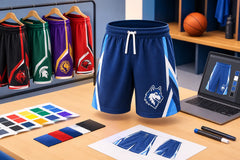
The second stage is mockup review. This is where the jersey design gets finalized with names, numbers, logos, and colors. Free mockups are helpful because they let teams catch mistakes before production starts. But this stage only saves time if the buyer checks everything carefully and responds quickly. If the team approves the wrong spelling or misses a number conflict, fixing it later costs more time.
The third stage is production. This is the part most buyers think of first, but it is only one section of the full process. Production time depends on the manufacturing method, quantity, and complexity. Sublimated uniforms are popular because they allow full customization without the layered feel of heat-pressed elements, and they hold up well over a season. A supplier built around custom teamwear can often process these orders more efficiently than a general print shop.
The final stage is shipping. Even a fast production schedule can feel slow if delivery is not planned properly. If your event date is fixed, work backward from the day you need the jerseys in hand, not the day you want to place the order.
How long do custom jerseys take for rush orders?
Rush orders can move much faster, but only when the buyer is ready. If you need jerseys quickly, you need a finalized roster, confirmed sizes, approved artwork, and fast communication. Rush service does not fix disorganization. It only speeds up the parts that can actually be controlled.
This is where direct messaging support helps. When teams can approve mockups, answer sizing questions, and confirm details in real time, the process gets shorter. For urgent team orders, speed comes from fewer delays between steps, not just from faster machines.
There is also a trade-off. A rushed order may limit your flexibility. If you are still debating design directions, changing sponsor logos, or waiting on half the players to submit sizes, you are not really in rush-order territory yet. You are still in planning mode.
The biggest delays teams create themselves
Most jersey delays do not start in production. They start with incomplete information.
The most common issue is a roster that keeps changing. One player joins late, another switches numbers, two names are spelled differently in different documents, and now the order has to be checked again. Another frequent problem is sending low-quality logos that need to be recreated or cleaned up before they can be printed properly. Teams also lose time when they ask for a mockup, then go silent for several days while trying to get group approval.
Sizing can cause trouble too. If a team guesses instead of confirming sizes, that may speed up the order in the moment, but it increases the risk of problems later. It is better to take a little extra time upfront than end up with uniforms that do not fit your players.
If you want the process to move quickly, send one complete order file with player names, numbers, sizes, design notes, and logos all at once. Fast turnaround starts with organized buyers.
What teams should ask before ordering
If you are comparing suppliers, ask what their stated turnaround actually includes. Does it begin after design approval? Does it include shipping? Are mockups included? What happens if you need a name correction after approval? Those details matter more than a vague promise.
You should also ask whether the supplier regularly handles team orders in your sport. Soccer, basketball, volleyball, and training gear all have slightly different fit expectations, customization patterns, and reorder needs. A company that works with clubs and schools every day usually understands the pace and pressure better than a generic custom apparel seller.
For example, a supplier focused on personalized teamwear, premium sublimation, free mockups, and a 15-day turnaround gives teams a more usable expectation than a broad estimate with no process behind it. That kind of structure matters when your season calendar is already tight.
When should you place your order?
The best time to order is as soon as your roster is mostly stable and your design decisions are made. For preseason orders, give yourself more time than you think you need. That creates room for approvals, shipping, and any last-minute corrections without turning the entire order into a rush job.
If you are ordering for a tournament, school season, or club launch, aim to have uniforms delivered at least a week before they are needed. That buffer matters. It gives you time to sort player kits, check names and numbers, and handle any surprises without game-day panic.
Teams that order early usually get better results. They have more design freedom, less stress, and fewer extra costs. Teams that order late can still get great jerseys, but they need to move fast, communicate clearly, and be realistic about what can be changed.
So, how long do custom jerseys take? Usually less time when the supplier is built for team orders and much more time when the details are scattered. If you want jerseys that look sharp, fit right, and arrive when the team needs them, treat the timeline like part of the order itself - not an afterthought. The fastest path is simple: get organized, approve quickly, and give your team enough runway to do it right.