How to Plan Team Apparel Without Costly Delays
A missed size chart, an unclear logo file, or a last-minute roster change can turn a simple uniform order into a scramble. When you plan team apparel early, your club or school gets more than matching jerseys. You get a polished team identity, a smoother ordering process, and gear that is ready when the season starts.
The best plan does not begin with picking a color. It begins with knowing who needs apparel, how they will use it, and when every piece must be in hand. Whether you are outfitting a youth soccer club, a school volleyball program, a basketball team, or a recreational league, a few smart decisions upfront protect your budget and your timeline.
Start With the Season, Not the Catalog
Work backward from the first date your athletes need to wear their gear. That could be opening day, picture day, a tournament, or a travel weekend. Add time for player registration, size collection, design approval, production, shipping, and distribution to families.
Teams often wait until the roster is final before starting the apparel conversation. That feels safe, but it can create pressure later. A better approach is to begin the design and pricing process while registrations are still coming in. You can finalize quantities and player details after the look is approved.
Custom apparel needs a real production window, especially when names, numbers, logo placement, and multiple garment types are involved. A stated 15-day turnaround can help teams move quickly once artwork and order details are approved, but earlier is still better. Early planning leaves room for corrections instead of forcing compromises.
Set two dates: an internal deadline for collecting sizes and payments, plus a final order deadline. Make both dates visible to coaches, parents, and team managers. If players miss the size deadline, establish in advance whether they will receive a standard size, pay for a later add-on order, or be responsible for separate shipping.
Build a Team Apparel Plan Around Real Needs
A complete order is not always a full uniform package. Some teams need home and away soccer kits with matching socks. Others need one game jersey, practice shirts, warm-up tracksuits, and polos for coaches. The right mix depends on the sport, climate, competition level, and budget.
Start by separating must-have items from nice-to-have pieces. Game-day uniforms belong in the must-have category. Warm-up hoodies, travel polos, fan gear, and extra training tops may be optional, but they can create a stronger program look when funds allow.
Think beyond the players, too. Coaches, assistants, team managers, trainers, and sideline staff should be easy to identify. A customized polo or quarter-zip gives adults a professional appearance without putting them in the same game jersey as athletes. For clubs running multiple age groups, coordinated staff apparel also makes the organization look established at tournaments and events.
It helps to plan for replacements. New players join, jerseys get lost, and goalie kits wear differently than field-player uniforms. Ordering a small number of blank or numbered extras can save trouble later. This is especially useful for larger clubs, although smaller teams may prefer to avoid extra inventory and place one focused order.
Choose Colors and Design Details That Stay Consistent
Your apparel should look like it belongs to one team from the first whistle to the post-game meal. Begin with your official colors, then decide which color leads the design and which one supports it. Too many accent colors can make a uniform busy and harder to coordinate across jerseys, hoodies, tracksuits, and fan wear.
Contrast matters just as much as style. Player numbers must be easy to read from a distance. A bold number color against the jersey background is usually the safest choice. The same applies to player names, sponsor logos, and any tagline placed on the back or sleeve.
Sublimated uniforms offer major creative freedom because colors, patterns, gradients, and graphics are built into the fabric rather than added as a separate layer. That means you can create a modern geometric look, a clean classic stripe, or a retro-inspired design without sacrificing the feel of the jersey. Still, more design freedom does not mean every detail belongs on the garment. Keep the focal point clear: team logo, team name, and player number.
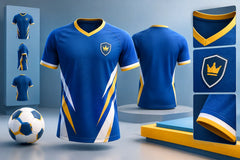
Send clean logo files whenever possible. Vector formats are ideal, but a high-resolution PNG can also work better than a screenshot pulled from social media. Low-quality art may look acceptable on a phone but can lose sharpness when printed across a jersey chest. A free mockup is the right time to check spelling, colors, logo position, number style, and sponsor details before production begins.
Make Sizing Easy for Families and Players
Sizing is one of the most common sources of team-order frustration. Do not collect sizes through memory, guesswork, or a quick group text. Share a clear size chart, state whether the fit is youth or adult, and give players enough time to measure a favorite athletic shirt if they are unsure.
US sizing helps simplify the process for American teams, but fit preferences still vary. Some players want a close athletic fit, while others prefer extra room for base layers or casual wear. Goalkeepers may need a different fit than field players. If possible, ask families to choose based on the garment type rather than assuming a hoodie size will match a jersey size.
Use one roster spreadsheet or form that captures each athlete's full name, jersey number, size, and any optional personalization. Have a second person review the information before submission. A double-check takes minutes and can prevent a jersey with a swapped number or misspelled name from reaching the field.
Set a Budget That Covers the Full Order
A low jersey price does not always mean a lower total. Your budget should account for customization, socks, staff gear, shipping, replacement pieces, and any tournament or league requirements. Ask early whether your league has rules on number placement, logo sizes, color conflicts, or sponsor marks.
For clubs and schools, team discounts and wholesale pricing can make coordinated orders more practical. Ordering apparel together usually gives you better control over colors and styling than letting each family shop separately. It also makes distribution simpler because one organizer can verify the full order before handing out gear.
There is a trade-off between offering many optional items and keeping administration simple. A broad team store-style selection can raise participation, but it may also create more questions and missed deadlines. For a first-year program, a core package plus one optional hoodie or polo is often easier to manage. Established clubs with experienced team managers can support a larger collection.
Keep Communication Direct and Specific
One person should own the final roster and another should approve the final design, even if the same organizer handles both roles. Define who can make changes after the mockup is approved. Without that clarity, late requests can create confusion and delay the entire order.
When speaking with your apparel supplier, provide the season deadline, sport, quantities, size ranges, artwork, and customization details from the start. Direct communication through channels such as WhatsApp or Messenger can be useful for quick questions, artwork feedback, and updates, especially when a team is working on a tight schedule.
RRR Sports America helps teams bring these details together with custom sublimated uniforms, free mockups, team-order pricing, and apparel options that extend from jerseys to tracksuits, polos, and hoodies. The goal is not simply to put a logo on a shirt. It is to give your athletes a coordinated look they are excited to represent.
Review Before You Approve
Before production begins, review the mockup as if you are seeing it from the bleachers. Check team name spelling, player numbers, logo colors, contrast, sleeve details, and any sponsor artwork. Confirm that the home and away designs are clearly different if your league requires both.
Then review the order sheet against the roster. Count every player, coach, and extra item. Confirm youth and adult sizes separately. Make sure goalie apparel is included, along with any custom patches or embroidered details that are part of the order.
A strong apparel plan gives your team room to focus on the season instead of chasing missing jerseys. Start the design conversation early, collect accurate details, and approve only what you would be proud to see under the lights on game day.