Team Apparel Fabrics That Perform Under Pressure
A uniform can look perfect in a mockup and still disappoint the first time your players warm up in August heat. Heavy fabric traps sweat. Thin fabric can turn see-through. Low-quality prints fade after a few washes. The right team apparel fabrics prevent those problems while giving your club, school, or league the sharp custom look it deserves.
For coaches and team managers, fabric selection is not a minor detail. It affects player comfort, how long uniforms last, how colors appear, and whether your order delivers real value over a full season. Here is how to choose fabric with confidence before approving your custom design.
What Team Apparel Fabrics Need to Do
Every sport asks something different from a uniform, but the best teamwear fabrics have a few jobs in common. They should move with the athlete, handle sweat, stand up to repeated washing, and keep your team colors looking bold. For custom uniforms, they also need to accept names, numbers, logos, and full-color graphics without cracking or peeling.
That is why fabric should be chosen by use, not just by feel. A soft material may be great for a supporter hoodie but wrong for a competitive soccer jersey. A thick, durable knit may work well for basketball shorts but feel too warm for a summer tournament polo.
Think about where your team plays, how often it competes, and what the garment must carry. A goalie kit needs more abrasion resistance than a warm-up top. A volleyball jersey needs stretch and lightweight breathability. A travel tracksuit needs structure, comfort, and a clean appearance off the field.
Polyester: The Workhorse for Custom Uniforms
For most soccer, basketball, volleyball, and training apparel, polyester is the leading choice. It is lightweight, durable, quick-drying, and especially effective for sublimation. That makes it a strong option when your team wants detailed logos, gradients, striping, sponsor graphics, player names, and numbers built directly into the garment.
With sublimation, the ink becomes part of the fabric rather than sitting on top of it. The result is a smooth finish that does not feel stiff and is far less likely to crack, peel, or flake. Your colors stay vibrant because the design is integrated into the material.
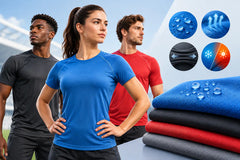
Polyester also manages moisture better than traditional cotton. It moves sweat away from the skin so it can evaporate more quickly, helping athletes stay more comfortable through intense practices and games. That does not mean every polyester jersey feels the same. Construction and weight matter just as much as fiber content.
A lightweight polyester is a smart choice for hot-weather soccer, running, and volleyball. A slightly heavier performance polyester can give basketball uniforms, goalie kits, and outer layers a more substantial feel. The best fit depends on your sport and climate.
Why mesh polyester earns its place
Mesh polyester uses an open knit or perforated structure to improve airflow. It is a reliable choice for teams that play outdoors, train in heat, or simply want a cooler jersey during high-output activity. Mesh panels can also be placed in high-sweat areas, such as the back or side panels, while keeping a smoother fabric across the main body for a polished design.
There is a trade-off. Very open mesh can be less opaque, especially in light colors. Ask for a fabric weight and construction that provides ventilation without making players feel exposed. This matters most with white, yellow, and pale custom jerseys.
Interlock polyester for a clean, premium look
Interlock polyester has a smoother, tighter surface than mesh. It often feels more refined, holds its shape well, and creates a clean base for logos and full-color sublimated artwork. It works well for soccer jerseys, basketball uniforms, polos, and team tops where a polished appearance matters as much as breathability.
Because it is less open than mesh, interlock can feel warmer in extreme heat. For many teams, that small trade-off is worth it for better opacity, a more substantial feel, and a crisp finish.
Cotton Blends: Best for Team Lifestyle Apparel
Cotton is comfortable, familiar, and soft against the skin. It has a clear place in team apparel, especially for hoodies, fan shirts, casual polos, and off-field gear. But cotton absorbs moisture rather than moving it away quickly, which makes it less suitable for demanding match uniforms.
A cotton-poly blend gives teams a practical middle ground. It offers some of cotton's softness while improving durability and drying time through polyester. This is a good direction for coaches' apparel, staff tees, travel shirts, spirit wear, and casual team collections.
For game-day jerseys, however, a performance polyester is usually the better call. Players who sweat heavily will notice the difference. Choosing cotton because it feels soft in the hand can lead to a heavier, wetter uniform by halftime.
Stretch Fabrics for Movement-First Sports
Some sports require a closer fit and unrestricted movement. Volleyball, training wear, compression layers, and certain basketball or soccer pieces benefit from stretch fabrics that include spandex or elastane. Even a small percentage can improve recovery, so the garment moves with the athlete and returns to shape instead of bagging out.
Stretch is valuable, but more is not always better. Too much stretch can make sizing less forgiving, increase cost, and create a more fitted look that not every player prefers. For a youth club or school program with a broad range of body types, a relaxed performance cut in standard polyester may be easier to fit across the roster.
When ordering fitted apparel, collect accurate sizes early. US sizing helps, but a size chart and a clear conversation with players prevent last-minute exchanges and uneven uniform sets.
Match Fabric Weight to the Season
Fabric weight is often overlooked because it is harder to see in a product image. Yet it can change how a uniform performs more than almost any design detail. Lighter materials are generally better for heat, speed, and layering. Midweight fabrics offer more coverage and structure. Heavier materials make sense for hoodies, tracksuits, and cold-weather sidelines.
For spring and summer soccer, a breathable lightweight jersey keeps players more comfortable. For a fall travel program, a matching tracksuit in a more substantial knit gives the team a professional arrival look while adding practical warmth. For indoor basketball, choose a fabric that breathes well without feeling flimsy under bright gym lights.
Do not select the same fabric for every item just because you want a matching set. Your jersey, shorts, warm-up jacket, polo, and hoodie can share the same colors and logo while using materials built for their specific job.
Color, Printing, and Long-Term Appearance
A custom uniform is a moving billboard for your team identity. Bright colors, sharp graphics, and readable numbers matter. Sublimated polyester gives you the widest design freedom because it supports all-over color and detailed artwork without adding layers of print.
Dark uniforms naturally hide dirt and grass stains better, but they can absorb more heat in direct sun. Light uniforms feel cooler and create a fresh, classic look, but they require enough fabric density to remain opaque. If your design includes white panels, light gray, or bright neon shades, make opacity part of your fabric conversation.
Also consider number visibility. Busy patterns can look great from close range but make numbers harder for referees, scorekeepers, and spectators to read. The fabric can support nearly any artwork, but the design still needs clear contrast in the places that matter.
How to Make the Right Choice Before You Order
Start by identifying the garment's main purpose: competition, training, travel, staff wear, or fan apparel. Then consider your playing conditions, expected wash frequency, design complexity, and budget. These answers narrow the field quickly.
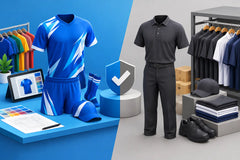
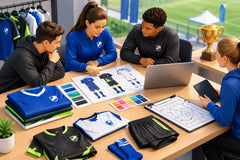
Before finalizing a bulk order, request a free mockup and review it as a uniform system, not just a front view. Check the number placement, logo scale, color contrast, and whether the selected material suits the garment's purpose. A great-looking mockup paired with the wrong fabric can still create an expensive disappointment.
At RRR Sports America, teams can build personalized apparel around their sport, colors, logo, names, and numbers without settling for a one-size-fits-all uniform approach. The goal is simple: premium-looking teamwear that performs hard and arrives ready for the season.
Choose fabric the same way you choose your lineup: based on the job ahead. A breathable sublimated polyester jersey, a durable goalie option, and a comfortable cotton-blend hoodie each earn their place when they help your team look united, feel ready, and play with confidence.