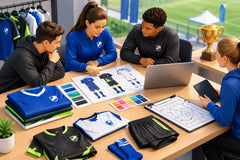
Tournament Teamwear Planning Example for Clubs
A tournament can expose every weak spot in a team’s apparel plan: missing goalie jerseys, duplicate numbers, late player additions, and hoodies that arrive after the bus leaves. This tournament teamwear planning example gives coaches, club managers, and school organizers a practical way to build one organized order that looks sharp, fits correctly, and arrives with time to spare.
Start With the Tournament, Not the Jersey
The best-looking uniform will not solve a rushed ordering problem. Start with the event details: tournament date, travel date, number of games, expected weather, sport rules, and whether players need home and away options. A summer soccer tournament may call for lightweight sublimated jerseys, matching shorts, and a separate goalie kit. A winter event may require tracksuits, hoodies, or warm-up tops for the sideline.
Work backward from the first day the team needs gear in hand. Do not set the deadline at the tournament date. Build in time for players to try on items, distribute packages, replace a sizing mistake if needed, and handle last-minute roster changes. A 15-day turnaround can be a major advantage, but the earlier you approve the final design and size list, the more control you keep.
For a typical club tournament, a smart target is to finalize the order three to four weeks before travel. If your roster is still moving, order the core team first and decide whether a small backup quantity makes sense. It depends on your budget and how likely player additions are, but one or two extra blank-number items can save a major headache.
Tournament Teamwear Planning Example: A 16-Player Soccer Roster
Picture a U16 soccer team headed to a three-day out-of-state tournament. The roster includes 16 field players, two goalkeepers, three coaches, and several parents who want supporter apparel. The club colors are navy, white, and gold. The team needs a polished look, but the manager also needs to keep costs under control.
The order begins with two game-ready jersey sets for each field player: a navy primary jersey and a white alternate jersey, both with the club logo, player name, and number. Each set includes matching shorts. The two goalkeepers receive contrasting goalie kits so they are clearly visible and compliant with match requirements.
Next comes travel and sideline apparel. Players receive a navy tracksuit or team hoodie, depending on the tournament forecast and available budget. Coaches get embroidered polos for a clean, consistent appearance on the sideline. Parents can be offered optional fan hoodies or tees using the same logo and colors, but these should be kept separate from the required player order so family purchases do not delay the uniform approval.
This plan creates three clear categories: required match gear, required travel gear, and optional supporter apparel. That distinction matters. When every item is treated as equally urgent, teams often delay the full order waiting for one parent to choose a hoodie size.
Sample order breakdown
For this roster, the manager could organize the order as follows:
- 32 custom field-player jerseys: 16 navy and 16 white
- 32 matching soccer shorts
- 2 complete custom goalie kits in contrasting colors
- 16 player tracksuits or hoodies
- 3 coach polos with embroidered club logos
- Optional fan hoodies and tees collected on a separate deadline
Build One Roster Sheet Before You Request a Mockup
A free mockup is most useful when your team details are already organized. Before sending design notes, create one master roster sheet. Include each player’s full name, preferred jersey name, number, jersey size, short size, and any special notes. Mark goalkeepers, captains, coaches, and anyone who needs a different cut or item.
Use the jersey name exactly as it should appear. “Jonathan Williams” and “J. Williams” are not the same production instruction. Confirm number assignments before artwork approval, especially if numbers are tied to league registration. A duplicate number is much easier to fix in a spreadsheet than after a custom jersey is printed.
US sizing is another place where teams can lose time. Ask players to review the size chart and submit their own selection by a firm deadline. Coaches should avoid guessing whenever possible. If a player is between sizes, consider the sport, preferred fit, and whether the garment will be layered over base gear. Soccer players may prefer a closer athletic fit, while travel hoodies are often ordered with more room.
Keep a separate column for payment status if families are contributing to the cost. The teamwear order should not depend on memory, texts, or verbal promises. One sheet gives the organizer a clean count, protects the budget, and makes final approval faster.
Design for Visibility, Not Just Style
Custom teamwear is where a club’s identity becomes visible. Use your logo, colors, numbers, and tagline with purpose. High-contrast numbers are easier for referees, scorers, photographers, and parents to read from a distance. A dark number on a dark jersey may look subtle in a digital mockup but perform poorly under stadium lights.
Sublimation gives teams more design freedom than basic stock uniforms. You can build color fades, striping, bold sleeves, classic collars, or a retro-inspired pattern directly into the garment without creating the heavy, layered feel of some printed applications. That flexibility is valuable, but too many design elements can make a jersey feel crowded. Choose one strong direction and repeat it across jerseys, warm-ups, polos, and fan gear.
For the soccer example, navy jerseys with gold accents can carry the club’s main identity, while the white alternate jersey uses the same badge placement, font, and gold detail. The result is coordinated without looking like a completely different team. Goalkeeper kits should connect to the overall palette but remain clearly distinct from both field-player uniforms and opponents.
Set a Budget That Protects the Essentials
A tournament order should put game-day requirements first. If the budget is tight, prioritize jerseys, shorts, goalie apparel, and the customization needed for league play. Add tracksuits, polos, hoodies, and fan items after the core order is covered.
Team discounts and wholesale pricing can make a full coordinated order more realistic, especially for clubs buying across several age groups. Still, cheaper is not always the lowest-cost choice. A uniform that looks good but has unclear sizing, weak color contrast, or incomplete personalization can create more expense before the next event.
Be transparent with families about what is included. For example, the player package may include two jerseys, two shorts, and one hoodie, while fan apparel is optional. State the total, payment deadline, and what happens if an athlete joins after the group order closes. Clear rules reduce confusion and prevent a manager from chasing payments during tournament week.
Approve the Details Like a Coach Reviews a Lineup
Before production begins, review the mockup and roster line by line. Check logo placement, spelling, number colors, sponsor requirements, size quantities, and goalkeeper distinctions. Ask another coach or team parent to check it too. A second set of eyes catches errors that are easy to miss after reviewing the same design repeatedly.
Do not approve based only on the front of the jersey. Confirm the back name and number layout, sleeve details, shorts, and every extra item in the package. If you have home and away kits, make sure each player’s number stays consistent unless your league requires otherwise.
This is also the moment to confirm shipping details. Send the order to an address where someone can receive it, inspect it, and distribute it. Avoid shipping directly to a hotel or relying on delivery during travel unless there is no other option. Fast shipping is valuable, but a team should never make tournament readiness depend on a last-minute handoff.
Make Distribution Part of the Plan
When the order arrives, sort each player package immediately. Label bags with player names and include every assigned item together: jersey, shorts, hoodie, and any special gear. Hold a short distribution session before the tournament and ask players to try on jerseys and check names and numbers before leaving.
For large clubs, assign one parent or coach to each age group. This keeps the manager from becoming the only person who knows where every item belongs. Save a digital copy of the final roster, design approval, and item counts for future orders. Next season, that record becomes a shortcut instead of another scramble.
RRR Sports America helps teams bring these details together with custom sublimated uniforms, free mockups, team-order support, and a broad selection of jerseys, goalie kits, tracksuits, polos, hoodies, and more. The strongest order is not simply the one that looks premium. It is the one every player can wear with confidence when the first whistle blows.