How to Create Sublimated Team Jersey Artwork
A great jersey design usually looks simple on the field. Getting it there is not. If you need to create sublimated team jersey artwork for a club, school, or rec program, the real job is balancing style, readability, brand identity, and production requirements without slowing down your order.
That matters because sublimation gives you far more freedom than basic print methods. You can build full-body patterns, bold color fades, sponsor placements, player names, numbers, and custom details without the heavy feel of layered decoration. But that same freedom can create bad artwork fast if the design is crowded, low-resolution, or built without the garment in mind.
What makes sublimated jersey artwork different
Sublimated jerseys are not decorated like standard screen printed tees. The artwork is dyed into the fabric, which means your design becomes part of the jersey instead of sitting on top of it. That gives teams a lightweight feel, long-lasting color, and more room for custom graphics across the entire garment.
It also changes how you should design. You are not just placing a logo on a shirt. You are building artwork for front, back, sleeves, side panels, and sometimes collars or trim. Every piece has to work together once the jersey is cut and sewn.
This is where many teams get stuck. A design can look great as a flat image and still fail once it wraps around seams, curves under the arms, or competes with numbers on the back. Good artwork is not just attractive. It is production-aware.
Start with the team identity first
Before you open any design software, lock in the basics. Team name, sport, colors, mascot, league rules, logo versions, number style, and sponsor needs should all be clear from the start. If those details are still changing, artwork usually gets revised over and over, and turnaround gets longer.
The fastest way to create sublimated team jersey artwork is to begin with a clear design direction. Some teams want a clean traditional look with strong stripes and easy-to-read numbers. Others want a modern edge with gradients, texture, and aggressive shoulder or sleeve treatments. Neither is wrong. The better choice depends on who is wearing it, where it is being used, and how long you want the look to stay current.
A youth club may want something bold and easy for parents and fans to recognize from the stands. A high school program may need to stay closer to school branding. A travel team may want a premium custom look that stands apart at tournaments. The best artwork reflects the team identity first and design trends second.
Build the layout around visibility
The number one mistake in custom jersey design is treating every area like ad space. When too many elements fight for attention, the jersey loses impact.
Start with the front chest. That is usually where the team name, logo, or main graphic belongs. Then consider the back, where player names and numbers must stay readable. If league play is involved, check number size and placement requirements early. A great-looking design that fails compliance is still a bad design.
Sleeves and side panels should support the main concept, not overpower it. Small repeated patterns, contrast inserts, or subtle gradients usually work better there than large complex logos. If you are adding sponsor marks, place them where they remain visible without crowding the team identity.
The best sublimated jerseys are balanced. They have energy, but they also have hierarchy. Your eye knows where to look first.
Use color the right way for sublimation
Color is one of the biggest advantages in sublimated apparel. You are not limited to a few ink placements, so you can create richer combinations and stronger contrast. But more color does not automatically mean better design.
Start with your primary team colors and one or two support tones. That is usually enough to build a sharp jersey. If you add too many shades, the uniform can start to look messy, especially from a distance.
Contrast matters even more than creativity. White numbers on a pale gray fade may look stylish on a screen, but they can disappear under field lights. Dark logos over detailed camo or heavy textures can also lose clarity. If the jersey is meant for competition, readability should beat trend-driven effects every time.
There is also a practical side to color choice. Sublimated color can appear different depending on fabric, lighting, and file setup. That is why mockups are helpful. What looks perfect in theory may need adjustment before production.
Logos, artwork files, and image quality
If your logo is blurry, stretched, or pulled from a screenshot, the jersey will show it. Sublimation can produce sharp detail, but only if the source files are strong.
Vector files are best for logos, lettering, and graphic elements because they scale cleanly. High-resolution raster files can work for photos or textures, but low-quality art creates soft edges and disappointing results. This is one area where shortcuts usually cost more time later.
If your team has multiple logo versions, choose the right one for the jersey. A simplified mark often works better than a detailed crest when space is tight. Small text inside a logo may look fine on a website and become unreadable on a sleeve or chest panel.
When in doubt, simplify. Strong jersey artwork usually wins through clean execution, not tiny details nobody can see from ten feet away.
Designing for panels, seams, and fit
This is where custom uniform artwork becomes more technical. A sublimated jersey is assembled from multiple fabric panels. That means your design needs to account for seams, curves, and garment construction.
A stripe that looks continuous in a flat mockup may shift when it crosses a side panel. A pattern that centers perfectly on the front may break awkwardly near the collar. Shoulder designs can also behave differently once the jersey is worn by players in different sizes.
That does not mean you should avoid bold design ideas. It means you should place important elements in stable zones. Team names, logos, and numbers should stay clear of seam-heavy areas whenever possible. Background graphics and textures are better choices for areas that may shift during construction.
Fit also matters. A design made for a youth roster may need different scaling than one made for adult sizes. The goal is consistency across the team, even though each jersey size is different.
How to create sublimated team jersey artwork that orders faster
Speed matters for clubs and schools. If you are trying to hit a season start, tournament date, or fundraiser deadline, clean artwork planning can save days.
The quickest path is simple. Finalize your roster details, confirm spelling, lock in colors, and decide where logos and sponsors go before the design moves into production. Late changes to names, numbers, or art placements are common, but they slow everything down.
It also helps to work from a clear reference. If you have another jersey style you like, use it to explain direction. Maybe you want a retro soccer look with modern color blocking, or a sharp geometric layout with a clean chest logo. Visual clarity speeds up approval because everyone is reacting to the same idea.
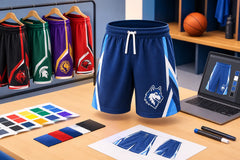
This is one reason free mockups matter. They help coaches and managers catch issues before the jerseys are made. A mockup can reveal if the numbers are too small, the logo feels oversized, or the color balance is off. Fixing that at the proof stage is easy. Fixing it after production is not.
Common mistakes that weaken a custom jersey
Most bad jersey artwork comes from one of a few problems. The first is overdesign. Too many fades, too many textures, too many accents. The second is weak contrast, especially around names and numbers. The third is low-quality source art.
There is also the issue of trend chasing. Some effects look exciting for one season and dated by the next. If your team wants a uniform that lasts for several years, cleaner design usually holds up better. If you update uniforms often and want a high-impact tournament look, you can be more aggressive.
Neither approach is wrong. It depends on budget, team culture, and how often you reorder.
Keep the process practical
For most teams, the goal is not to become jersey designers. The goal is to get great-looking custom uniforms without wasting time. That means the smartest approach is practical: know your identity, use strong files, keep the layout readable, and review a mockup before approving production.
If you need support, a supplier that understands sublimation can make a big difference. RRR Sports America works with teams that want premium-looking custom uniforms, fast turnarounds, and artwork that actually makes sense for the final garment, not just the screen.
A strong jersey does more than match your colors. It gives your players a look they are proud to wear, and it makes your team instantly recognizable the moment they step onto the field.